

Negotiate garment factory costs for your brand! Unlock better pricing & quality. Request a quote within 24 hours!
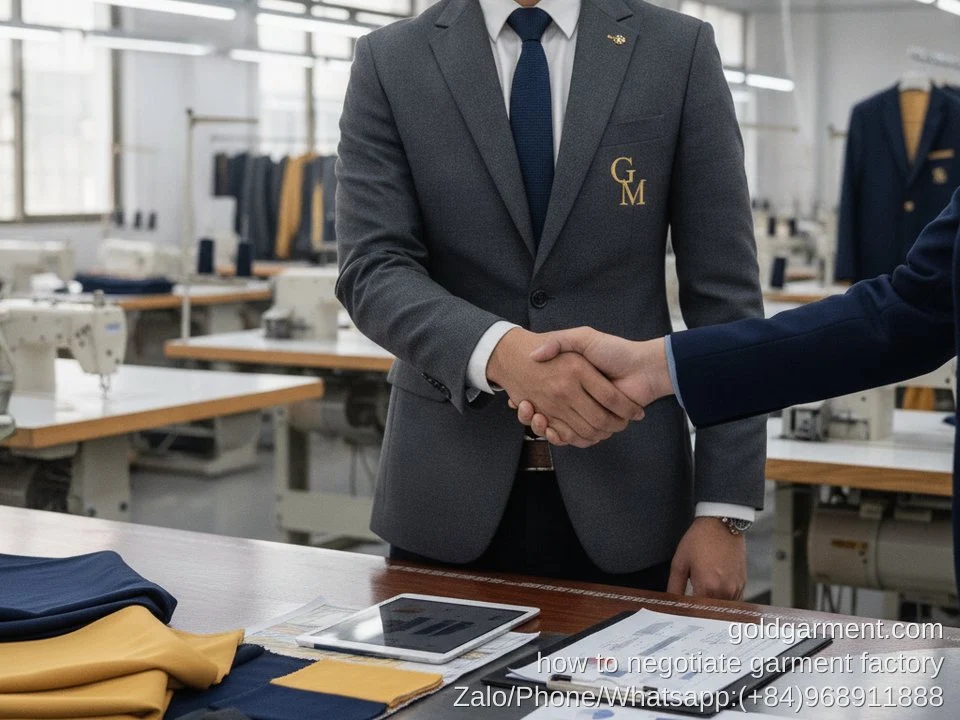
How to Negotiate with a Garment Factory: 8 Proven Tips for First-Time Buyers
Embarking on your first bulk garment production run is an exciting milestone for any fashion brand. However, the prospect of negotiating with a garment factory can feel daunting, especially when you're unfamiliar with the process. Understanding how to negotiate effectively with a garment factory is crucial for securing favorable terms, ensuring quality, and building a strong, long-term partnership. At Gold Garment, with over a decade of experience manufacturing for international brands, we've seen firsthand what makes a negotiation successful. This guide offers 8 proven tips to help first-time buyers navigate this essential step with confidence.
A successful negotiation isn't just about getting the lowest price; it's about establishing a collaborative relationship built on trust and mutual understanding. By approaching your garment factory negotiation with preparation and clear communication, you can achieve your production goals efficiently and cost-effectively. Let's dive into the strategies that will set you up for success.
1. Thoroughly Research and Prepare Your Requirements
Before you even think about contacting a factory, the most critical step in how to negotiate garment factory is meticulous preparation. Clearly define your product specifications, including fabric composition, weight, color Pantone codes, sizing charts, construction details, and any special finishing requirements. The more detailed your tech packs and spec sheets are, the more accurate quotes you will receive, and the fewer misunderstandings will arise during the negotiation process.

Understand your target cost per unit and your overall budget. Having a realistic understanding of market pricing for similar garments will give you leverage. Researching potential factories, their specializations, and their typical MOQs (Minimum Order Quantities) is also vital. At Gold Garment, we cater to MOQs from 100 pcs/style, offering flexibility for emerging brands.
2. Understand Factory Cost Structures
To effectively negotiate on price, you need to grasp what goes into the cost of garment manufacturing. This includes raw material costs (fabric, trims, thread), labor costs, factory overhead (machinery, utilities, rent), quality control, packaging, and shipping. Knowing these components allows you to identify areas where potential savings might exist, or where a higher price might be justified by superior quality or ethical practices.
For example, the type of fabric you choose significantly impacts the final price. Similarly, complex design elements or intricate stitching can increase labor time and, consequently, cost. Understanding these nuances will help you engage in informed discussions about price negotiation clothing manufacturer partnerships.
3. Get Multiple Quotes
Never settle for the first quote you receive. It's a standard business practice to solicit quotes from several reputable garment factories. This allows you to benchmark pricing and understand the market rate for your specific product. When comparing quotes, look beyond just the bottom line; consider the inclusions and exclusions in each offer.
Factor in lead times, payment terms, and the factory's reputation for quality and reliability. A slightly higher quote from a factory with a proven track record of excellence might be more valuable than a lower quote from an unknown entity. This comparative approach is one of the most effective garment factory negotiation tips.
4. Negotiate on More Than Just Price
While price is often a primary concern, it shouldn't be the sole focus of your negotiation. Consider other factors that can add significant value to your partnership. This could include negotiating for faster turnaround times for sample development, more flexible payment terms, or enhanced quality control measures. Perhaps you can negotiate for a slightly lower MOQ or better shipping terms.
For instance, if a factory is hesitant to lower its price significantly, you might ask for a complimentary pre-production sample or a dedicated quality assurance inspector on-site during bulk production. These concessions can often be as valuable as a direct price reduction, especially when building a long-term relationship.
5. Be Clear About Your Quality Expectations
Quality is paramount in garment manufacturing. Clearly articulate your quality standards from the outset. This includes specifying acceptable quality limits (AQL) for defects, the types of inspections that will be conducted, and the criteria for approving or rejecting a production batch. A factory that understands and commits to your quality standards is invaluable.
Discuss the importance of skilled Vietnamese craftspeople at Gold Garment, who are integral to maintaining high production standards. Ensure you have a clear understanding of the sample development process and how feedback will be incorporated. This proactive approach to quality control prevents costly issues down the line.
6. Establish Clear Communication Channels and Protocols
Effective communication is the bedrock of any successful business relationship, and it's especially critical when working with an overseas garment factory. Define who your primary point of contact will be, the preferred communication methods (email, WhatsApp, video calls), and the expected response times. Regular updates are essential throughout the entire production cycle.
Understanding factory communication tips involves being concise, clear, and polite in all your interactions. Provide feedback promptly and constructively. At Gold Garment, we prioritize transparent communication, ensuring our clients in the USA, Europe, Australia, and Southeast Asia are always informed. This open dialogue is key to smooth OEM/ODM and bulk manufacturing processes.
7. Understand Payment Terms and Schedules
Payment terms can significantly impact your cash flow. Typically, garment factories will require an upfront deposit (often 30-50%) to commence production, with the balance due upon completion or shipment. Negotiate these terms to find a balance that works for both parties.
Be wary of factories demanding unusually high upfront payments or full payment before production begins. Conversely, be prepared to meet reasonable deposit requirements. Understanding our factory-direct pricing at Gold Garment can help you assess the fairness of proposed payment schedules. Always ensure all payment terms are clearly documented in your contract.
8. Build a Relationship, Not Just a Transaction
The most successful partnerships with garment factories are built on trust and mutual respect. View your factory as a strategic partner rather than just a supplier. When you invest time in understanding their capabilities, challenges, and business practices, you foster a stronger, more collaborative relationship.
This long-term perspective can lead to greater flexibility, better problem-solving, and preferential treatment in the future. Building a strong relationship means being a reliable and fair client. Consider the benefits of working with a factory like Gold Garment, located at 32 Pho Quang, Ho Chi Minh City, Vietnam, which values long-term partnerships. This approach is fundamental to successful custom design and manufacturing.
Frequently Asked Questions
Q: What is the typical MOQ for a garment factory?
A: Minimum Order Quantities (MOQs) vary significantly between factories and depend on the type of garment, fabric, and complexity of the design. Some factories may have MOQs as high as 1,000 pieces per style, while others, like Gold Garment, offer MOQs starting from 100 pieces per style, making them accessible for smaller brands and test runs.
Q: How long does sample development usually take?
A: Sample development timelines can range from 1 to 4 weeks, depending on the complexity of the garment, the availability of materials, and the factory's current workload. It's crucial to factor this into your overall production schedule and to communicate your timeline expectations clearly.
Q: What should I do if the factory's quote is higher than my target price?
A: If a factory's quote exceeds your target, first review your specifications to see if any elements can be simplified without compromising quality or brand identity. Then, discuss your target price with the factory. They may be able to offer alternative fabric options, adjust construction methods, or explore other cost-saving measures. Remember to also consider if the higher price reflects superior quality or ethical production practices.
Q: How can I ensure the quality of my bulk production?
A: Ensuring quality involves multiple steps: providing detailed tech packs, agreeing on AQL standards, conducting pre-production sample reviews, and arranging for in-line or final inspections. A reputable factory will have its own quality control processes, but it's wise to also consider third-party inspection services for added assurance.
By implementing these 8 proven tips, first-time buyers can approach garment factory negotiations with greater confidence and secure favorable terms for their production needs.
Ready to discuss your next custom garment project? Let's start the conversation and explore how we can bring your designs to life.
📩 Request a Free Quote — Response Within 5 Minutes
GOLD GARMENT — Vietnam's Trusted Garment Manufacturer
📱 WhatsApp: +84 968 911 888
📩 Email: contact@goldgarment.com
🌎 Website: goldgarment.com
📍 Factory: 32 Pho Quang, Ho Chi Minh City, Vietnam
Factory-direct pricing · MOQ from 100 pcs/style · Sample development · Worldwide shipping




COMMENTS